
Who gets to decide?
Every museum makes hundreds of decisions every week: how to deal with an unhappy visitor, which applicants to interview, whether to cancel an undersubscribed program, when to schedule an event, which image to use to market an exhibition.
In thinking about how museums exercise effective decision-making, I reached out to Becky Beaulieu, Louise Taft Semple President & CEO, Taft Museum of Art. Becky is not only an expert in museum administration – she is also a thoughtful and experimental leader in museum workplace culture. She is the author of Financial Fundamentals for Historic House Museums and Endowment Essentials for Museums, and the editor of the forthcoming Transforming Museum Workplace Cultures.

Becky Beaulieu, Louise Taft Semple President & CEO, Taft Museum of Art. Photo by Tasha Pinelo
TLDR:
Becky works with her team to make decisions collectively whenever possible
Ongoing reflection is critical to the Taft Museum’s process. In this way, they constantly are improving their systems. When something goes wrong they think of it as the system that failed, not the person.
One way to support staff in decision making is to give feedback at the right time in the process - a system that has evolved and improved at the Taft Museum - so that feedback is supportive and not punitive.
Becky does not delegate decisions that have liability implications or that might make the public angry - she feels her name needs to be directly attached to those decisions.
How do you decide what decisions to delegate, and to whom?
As I prepared for this conversation I thought about how the word “delegation” can feel daunting. But really, it’s just shared authority. At the Taft Museum we are committed to transparent, collectivized agency, which is a different kind of process to reach a conclusion. What I care about is that we - my team and I - are coming from the same set of values and the same priorities.
How does collectivized agency work? How do you ensure that you and your team have shared values and priorities?
When I started here four years ago we embarked on an institutional plan. We made sure every team member was involved - the entire staff and the full board, along with 700 community voices. This work led to internal and external investment in the museum. When we did our AAM accreditation site visit, our peer reviewers were laughing because all of our staff lanyards have a little fold out of our strategic plan – every person carries it in their badge with them so they see all of our mission, our vision, our values, and our goals.
We used collectivized agency to create the plan. Each team defined what success looks like to them, and came up with quantifiable metrics. Three team members are rewriting their job descriptions as we update the plan. We just finished a budget process that was completely created by the departments. I did not edit one line on that budget. That was not my document – that was a shared document.
Creating the plan reset our ground level altogether, that has impacted every single one of our regular systems and operating procedures. So now every decision follows essentially the same format, although the voices around the table change - we are not going to have community voices participating in creating job descriptions or updating policy or creating our budget. But we make it a communal process every time.
So are all decisions at the Taft collective? And if not, how do individuals know which decisions belong to them?
When we switched to a 32 hour workweek it created an opportunity for every department to create an innovative schedule for themselves, which required total accountability to each other. Any person who is on site, as the representative of their team, needs to understand the scope of the department’s work, our bottom line, our goals and parameters, and act on behalf of the department. Departments started creating FAQ lists for each other. So if somebody comes to the front desk and has a question, and they are talking to a college student who only works on Saturdays, we equip that employee with information and empower them to deal with questions that arise.
In general we expect fluency and cross-training across departments. I was having lunch yesterday in our cafe and there was a group of nine that came in without a reservation. There were only two servers working, buzzing around, and our HR director saw this. He knew exactly what to do because he was in regular communication with our visitor services director, so he reset the tabletops and got the group seated.
Every team member gets a tour of every new show. Every team member gets a tour of new historic house installations. Whenever we have a new content-oriented piece we encourage everyone to have access to it and familiarity with it so that they can answer questions. If someone has a question about the art in an exhibit, we want our security guards to feel able to answer it. This is not to put pressure on anyone – it's to say, we want you to be another voice of the museum.
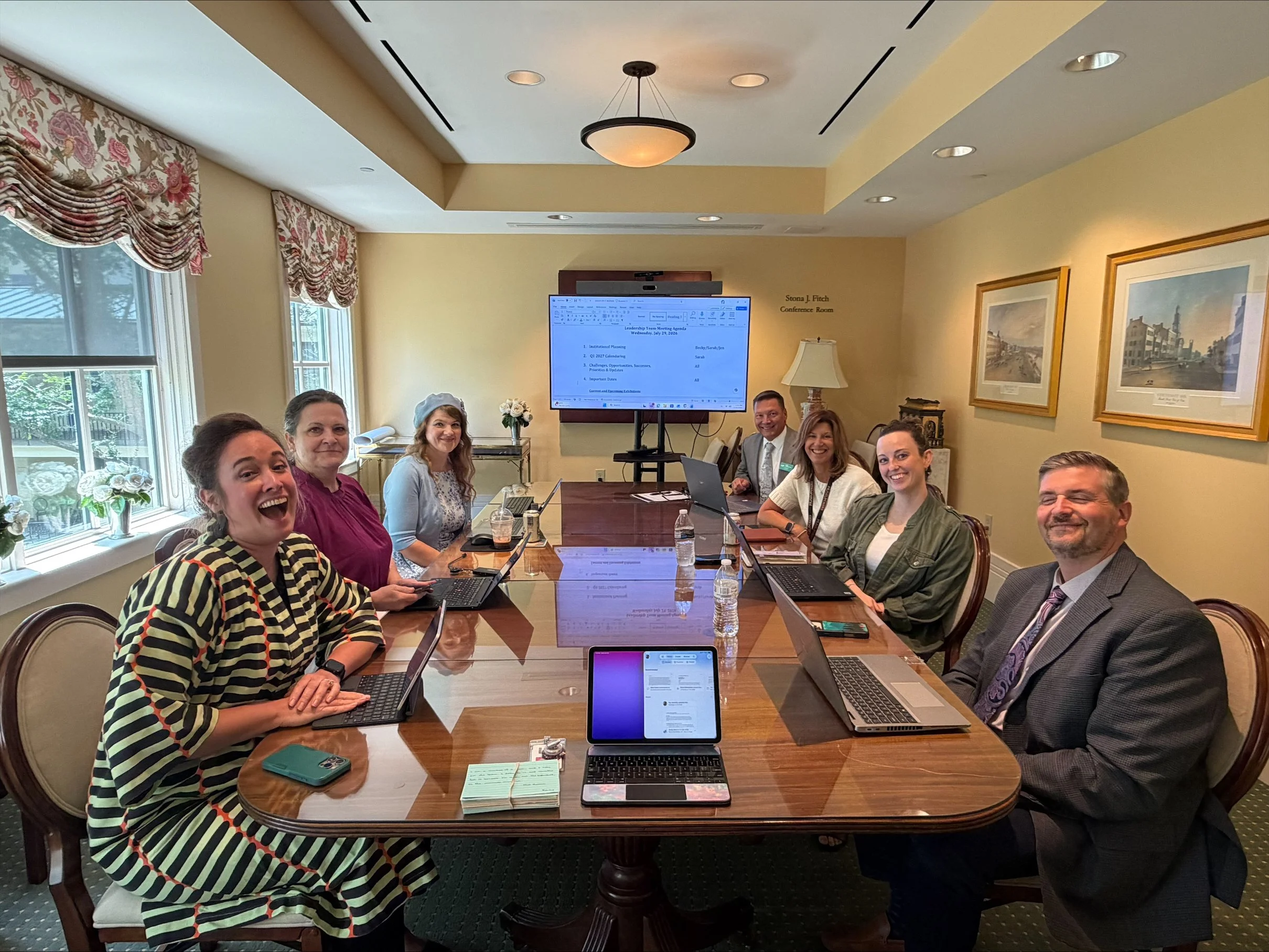
A leadership team meeting at the Taft Museum of Art. Photo by Becky Beaulieu.
I hear stories about staff who make a decision and then share it and feel undercut by their manager’s response. What happens in situations where individuals make job-specific plans and decisions?
At other museums I have seen a curatorial team put together a whole show, and the director doesn’t really weigh in as the show is being conceptualized. And then during a final installation walkthrough, the moment when everyone should be feeling a sense of accomplishment, that’s when the director finds all these things wrong with the exhibition.
I think the question is, how do you filter ideas in a way that's constructive and collaborative? Part of the decision-making process is giving feedback in a way that’s respectful to the other team members. For exhibitions here we do a virtual walkthrough before anything has been built or hung on the walls, and that's when I give my feedback. And then when we do the final walkthrough, when everything is installed, that's a time for the team to be in wonder together.
These are systems based on years of trial and error. When something goes well we acknowledge it, and say, let's do this next time. And when things go poorly we note what we should have done differently. There is no blame culture. If we do it wrong, we're just like, “well, we all learned the hard way on that. Let's do it differently next time.” We don’t assign blame to an individual, or talk about how they should do something differently. Because with the systems approach, we look at the system. The system failed us, not the individual, who was doing their job. We just hadn't identified how we wanted it to be done.
Has there been a time when you allowed someone else to make a decision that you disagreed with, and you were proven wrong?
Absolutely. A great example: recently we sunsetted a monthly lunch program series that had been declining in attendance. Our education director said she would like to replace it with a monthly dinner, working with a scholar who studies Cincinnati food history and related multi-course meals planned by our cafe chef. I had come from a place with a very, very successful cafe, and we had tried over multiple years to do a dinner program, and it never worked. But I said, okay, let's try it and after the first one we can talk through how it went. Everything in my experience told me this will not be successful and that it would cause staff burnout. And you know what? It was incredibly successful. It sold out. We have now followed up with more, and they are all sold out. Our chef makes these amazing meals. People love it. So I learned that my experience was out of sync with this audience and this community and this team, and I was very happy to be proven wrong.
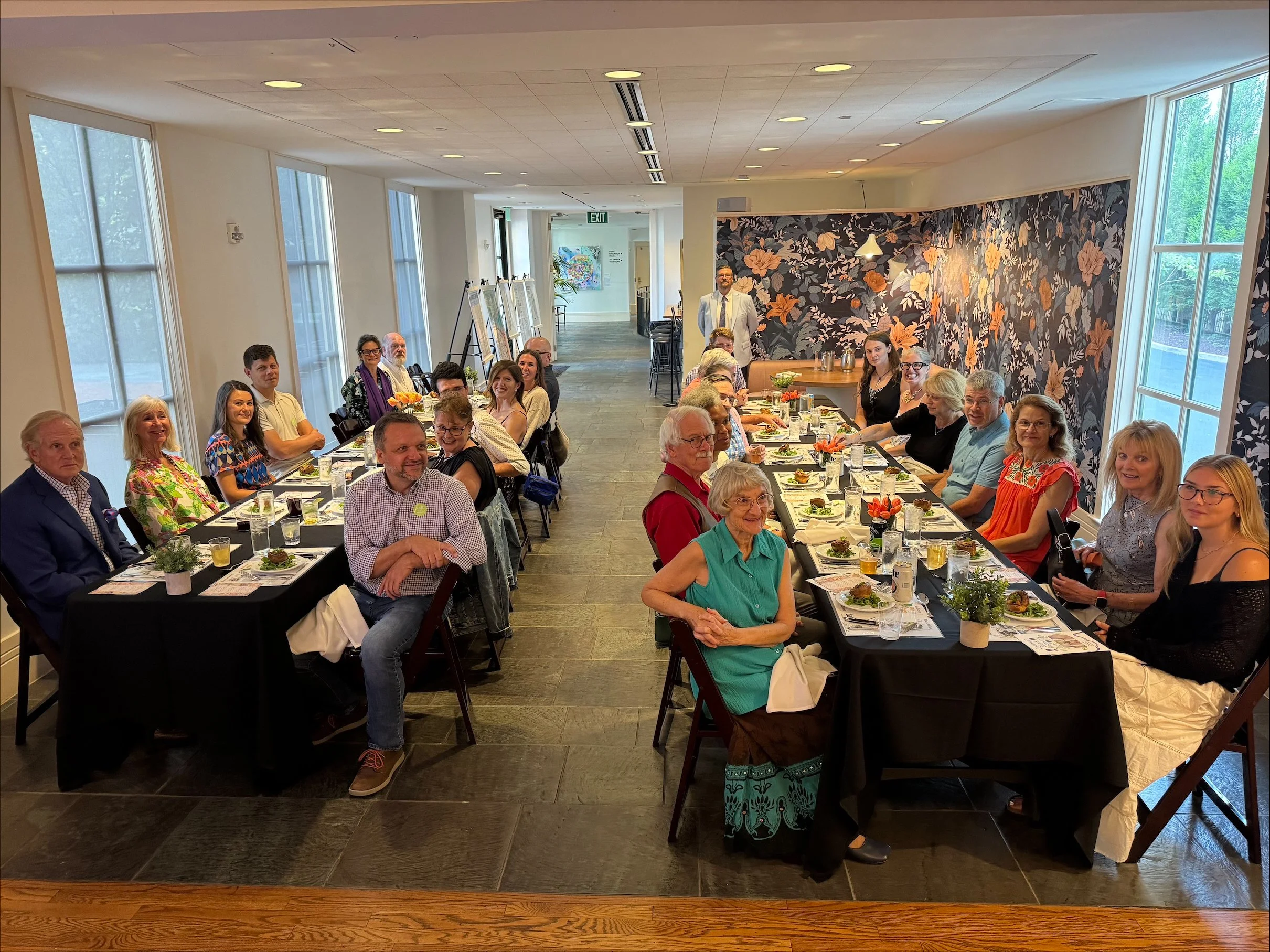
The Taft Museum of Art’s new dinner program. Photo by Elise Solomon.
What is one decision you would never delegate?
Weather closures, which is also my least favorite decision. I have a wonderful director of visitor services who will make a recommendation. But weather closures are a safety issue - if you make the wrong call and you have people driving it's unsafe. I don't want to delegate it to anyone else who has to take the heat if they make a wrong decision. And it is a liability issue – I just want to have that on my shoulders and nobody else's.
What about decisions like hiring a new leadership team member?
We've really collectivized that too. When we bring in new senior department directors the HR director and I do the initial vetting. If somebody is really not a good fit, we are able to see that right away. But once we have three or four people that we think are a potential fit, I'll have some time with them, but they also have time with all of the other team members independent of me. And anyone who met with the candidate can share a recommendation confidentially. And we always make sure there's one moment where they meet with a member of our security team or frontline staff or an intern or a part-time educator, to see how they deal with someone who, on paper, would fall somewhere else in the organizational structure. We have a no a**holes policy. I don't care if somebody has won the biggest award in the world and they have the most exceptional resume you've ever seen. If they come here and they treat any team member with disrespect, they're out. They aren’t aligned with our values.
