
Why do we need "classroom management" in museums?
At the end of this post there is a link to this survey. Please help me more deeply consider the question of classroom management by completing and sharing the survey!
A few months ago, I was tagged in a tweet asking whether I knew of any good resources for classroom management in the museum setting. More recently, a colleague started an on-line conversation asking for classroom management strategies. And, although I can’t put my hands on other similar tweets and posts, I am certain that I have seen this question many times recently.
Museum educators are concerned about management strategies because it is very difficult to teach a group of children in the galleries when they are not following a shared and accepted code of behavior. It is hard to facilitate a large group discussion if children do not listen to each other, which often involves being quiet for most of the time and raising their hands before sharing their ideas. It is difficult to efficiently move from one gallery to another if children wander off.

Students in Museum Art Classes at The Cleveland Museum of Art.
It concerns me – and I suspect others have noted this, as well – that museum educators often resort to the phrase and model of “classroom management.” This implies that we are using classroom behavior as a model for gallery behavior. On one level, this makes sense: A class of school children presumably knows a shared set of rules, and it is easier to enforce these rules in a new educational setting than to create and teach new rules. But there are a number of reasons that this approach may be misguided:
1.The contributors to Museum Questions have noted over and over that the value of the museum experience for school groups is that it is different from the school setting. To cite just one of these contributors, Brian Hogarth wrote, “What I hope is emerging is the idea that museums are not extensions of the classroom, but rather engender exactly the kind of learning that we believe students should engage in.” In order to rethink museums as spaces apart and different from the classroom, we may need to rethink the behavior we expect and encourage in school groups.
2. The need for “classroom management” may indicate a program design problem. Kylie Peppler, a professor of Learning Sciences, claimed that management problems on a class visit are “an indicator that something is not working in the tour. Something is not high quality in that environment. In a high quality environment the teacher reports a sense of Zen.” If children on a group tour are acting in a way that makes learning challenging, is it possible that the learning experience is structured in a less-than-ideal way? Instead of relying on classroom learning strategies, are there alternate ways we can engage children?
3. Ongoing concern about classroom management reflects a set of long-held, and possibly faulty, assumptions about museum and classroom behavior. Do we want children to raise their hands because this makes conversation possible, or because it is part of our own familiar and respectful code of behavior? Do we want children to walk from point A to point B without stopping to look and talk because point B is so worthwhile, or because of an ingrained and unquestioned assumption about how museum tours should be structured? In the article “Intentional Civility,” Elaine Heumann Gurian questions our beliefs about how people should act in museums. She writes, “it is past time for public institutions… to intentionally review the many assumptions they have made about the people they interact with, [and] how those assumptions have been translated into action.” Gurian is speaking about the general visitor, not school groups; she notes that assumptions about visitor behavior reflect “a model from a former time, when good manners were assumed to be part of the upper class armamentarium to which the rest of society either already aspired, or ought to. Museums, in this formulation, are gracious places and should not be inclusive of such behaviors found in a diversified culture that might undermine their elevating effect.” The article is a call for museums to consider the intent of behavioral rules and assumptions, and to allow these to guide a reconsideration of the behavior we encourage among both staff and visitors.
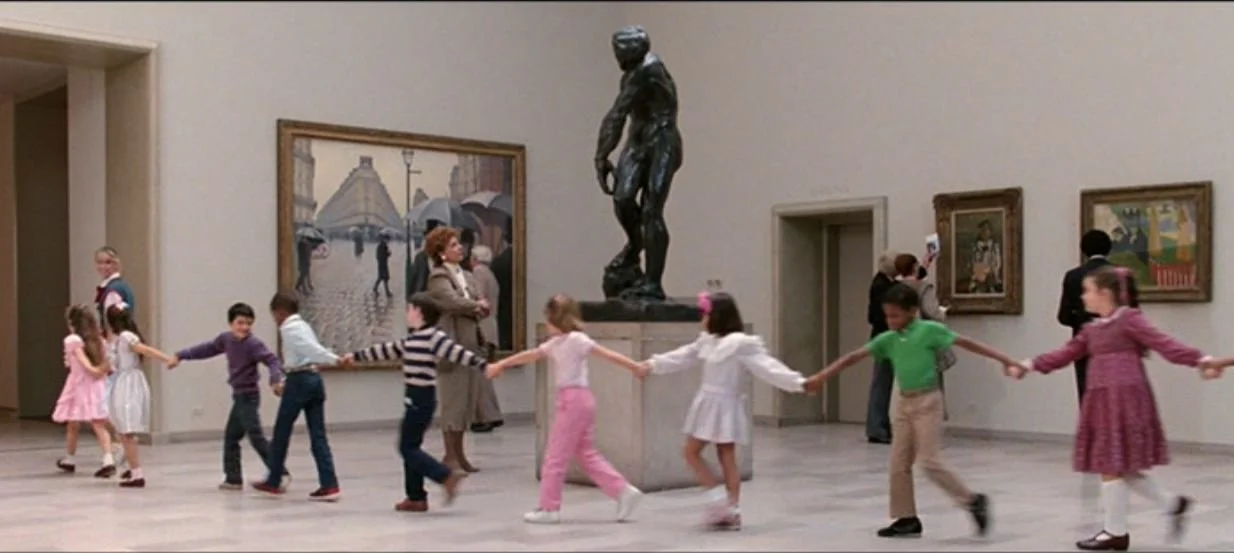
Perhaps instead of asking about strategies to manage and encourage a certain set of behaviors, we ought to be asking: What does good behavior look like for school visitors to the museum? Under what conditions do these behaviors occur?
I would like to better understand the context and use of classroom management. Perhaps some of you have figured out program designs that reduce the need for management. Perhaps some of you have great management resources to share. Perhaps there are certain groups that are most difficult, which might reveal more about why and when management is needed. Please help me to learn more by completing this survey. I encourage you to share this survey with other museum educators who work with school groups, including those who lead the tours. If enough of you respond, I will use the responses to create a follow-up post.