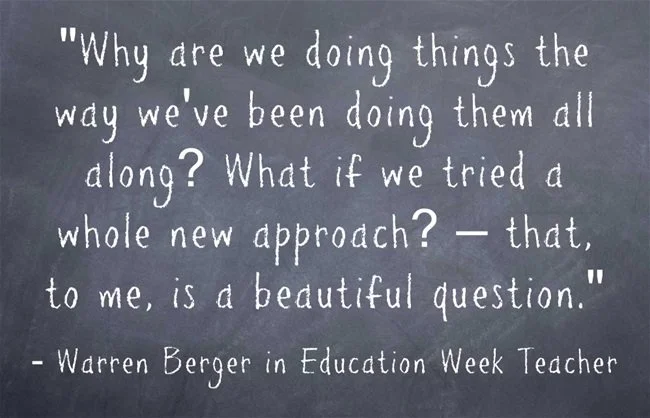
Schools and Museums: What if we tried a whole new approach?
There is a great deal written about the myriad problems with the K-12 educational model in the United States. The system is outdated, constructed to suit a society of factory workers and farmers. The system (many argue) needs to be rethought from the ground up: What should children be learning and why? What scheduling, teacher training, curricula, and assessment are appropriate for the 21st century?

Similar arguments can be made about the museum school tour. In Teaching in the Art Museum Elliott Kai-Kee traces the roots of school programs to a guided tour model originally developed for adults. When an independent adult visitor comes to the museum, it makes a great deal of sense to offer him or her an hour-long tour, which the visitor can then pair with independent time in the galleries, lunch in the café, or a visit to the gift shop. But when students come to the museum – from greater and greater distances, as cities and suburbs have expanded, taking time out from a test-driven, centrally mandated curriculum – an hour-long experience makes very little sense. The problems lie in both the cost (the time and money both museums and schools dedicate to these programs) and the benefits (the articulated and perceived value of school tours): our failure to articulate a clear purpose, along with our inefficient systems, results in a very low cost to benefit ratio (high costs, low benefits).
The cost can be seen in the daunting, complicated logistics and finances of school visits to museums. On the museum’s end, museum staff are required to book and greet groups, train tour guides and/or give tours, and create accompanying materials for teachers. In addition, school staff must book (often expensive) buses, identify chaperones, prepare students, and find a place for students to eat lunch. Teachers sacrifice significant amounts of teaching time in an already short school year. All of this so that students can spend 60 minutes being taught by a stranger, often with less teaching experience and expertise than the students’ regular teacher.
Enumerating precise costs is challenging, but articulating benefits is even more challenging. For most of us – museum educators and teachers alike – there is no question that students should visit museums; that such visits are valuable, and even necessary. But we are often unable to articulate and support a clear purpose for our tours.
What are the benefits of school tours to museums – why should schools visit? Museums are historically reactive instead of proactive in answering this question. We align tours with the curriculum, link them to common core standards. But for many of us the real benefits lie in entirely different types of goals: for example, the ability to understand the world around us and where objects come from, learning to think critically about objects and issues, or developing creative responses rooted in connecting disparate ideas.
Museum staff are creative and focused; we are consistently trying to improve school programs, experimenting with new booking systems, docent training strategies, student outcomes, or tour themes. But this tinkering is akin to fixing middle schools with block scheduling and after-school programs. School tours demand to be examined more closely. And unlikely the unwieldy American school system, which serves nearly 50 million students in 100,000 public schools, museums are nimble and flexible. We have the opportunity to experiment, and to make change.
This post is the beginning of an extended investigation into the costs, benefits, and possibilities of school tours. What do we offer students in the context of school visits? How do we articulate a benefit that makes sense to teachers and administrators charged with educating children? How do we make these benefits visible? And how do we deliver these programs to school groups in a way that makes sense given the structure of the schools themselves? Over the next few months, I will share interviews with museum educators, classroom teachers, and others, which I hope will shed light on this topic. As I conduct these interviews, I will add to and update a list of ideas and implications that emerge from these interviews. I am also collecting a list of published resources, from any field, which might shed light on school tours.
I am collecting ideas, and welcome yours. Please let me know if you have ideas or resources to contribute, so that I can share them, or set up an interview or a guest blog post.